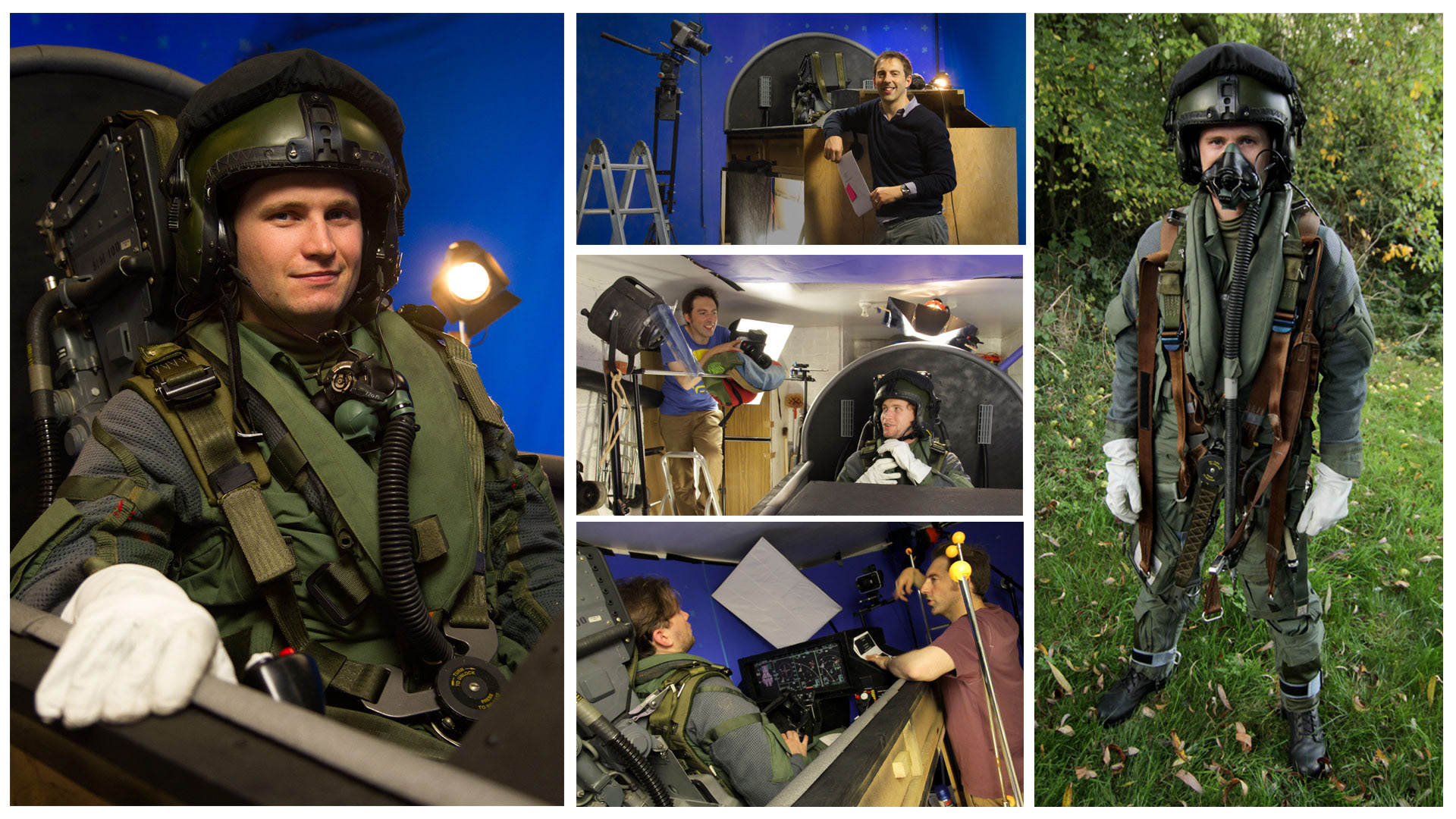
Made and funded by myself, 'Rocket Rider' was created to show my creative skills and visual eye as a filmmaker.
It also satisfied my life-long desire to create my very own Hollywood action sequence!
From start to finish, the project was a huge challenge for me - from it's original inception as a narrative short film called 'Doppelgänger' where I quickly learnt about the pitfalls of trying to attempt over ambitious ideas with limited money and resources - to learning how to deal with defeat, picking myself up and learning to focus on my specific goal and the creation of 'Rocket Rider' as a stand alone project to showcase my creative abilities.
From start to finish, the project was a huge challenge for me - from it's original inception as a narrative short film called 'Doppelgänger' where I quickly learnt about the pitfalls of trying to attempt over ambitious ideas with limited money and resources - to learning how to deal with defeat, picking myself up and learning to focus on my specific goal and the creation of 'Rocket Rider' as a stand alone project to showcase my creative abilities.
Every step of the way, I learnt so many valuable skills - scriptwriting, scheduling, logistics (and more importantly what is realistic to achieve and what is just pure fantasy), dealing with talent, new camera skills, rope skills, sound recording and foley work, colour technology and grading, DNEG and RAW footage, audio mixing and track laying and all the different VFX skills needed to make a modern film, like rotoscoping work, 3d tracking, planar tracking, digital mattes etc. etc -
Every skill I learnt making Rocket Rider has been utilised over and over again in al the other projects I've worked on since. Not only that, but my editing & timing skills improved massively too.
I believe that making short films isn't just about the finished film - it's also about the processes and skills you learn whilst doing it. It's also what you learn NOT to do again that's also so important. (And boy, are there plenty of things I hope that I'll NOT DO AGAIN which just wasted lots of my precious time and money...)
Some of my epic achievements making Rocket Rider include building an F-35 cockpit set using plywood, art board and a vast array of switches and bottle tops. Information on the F-35 cockpit was incredibly hard to find when I started building the set, but eventually I found two photographs that I could base my set on. The only was I could work out the scale was by eye-matching and pure guesswork.
I spent a year researching and sourcing authentic RAF flying clothes for my main character. I tested multiple helmets and costume options to get the correct look I wanted. (Testing costumes myself, I got my head stuck inside an RAF immersion suit and had a major panic attack in the back of a warehouse. Luckily my panic was spotted and I was helped out of my rubbery trap!)
Screen testing costumes is an interesting process - I actually decided against using a more up-to-date RAF MK10 helmet I had as it just didn't look right on my actors head during the screen tests. My actor wasn't comfortable wearing it either. A few experts have given me flak for using a MK4, but the film is pure fantasy anyway, so I don't think that matters.
What isn't shown in 'Rocket Rider' at all, is that - at great expense - I also had all the costumes made for the World War 2 Spitfire pilot in the original 'Doppelgänger' script and also sourced an authentic antique WW2 flying helmet and mask too. Much to my frustration these just sat unused in a box for ages.
Sourcing the Martin Baker MK10 ejection seat was an adventure in itself and I quickly learnt how imagination can be so different from reality. Just lifting the damn thing into position was a struggle for two men and in the process limbs were bruised and fingers got squeezed.
Then there was the small problem of getting it into the correct position for filming...
Another problem I hadn't thought about properly.
The solution required hunting down a specialist ejection seat servicing cart - which is actually even more rarer than ejection seats themselves - and then having it specially adapted to fit a Mk10 seat as the only one we could find was for an earlier model. Again, the cart was a huge, heavy beast which often seemed to have a mind of its own and loved nothing more than bruising ankles and trapping fingers.
How RAF ground crew manage to keep all of their fingers moving all of that heavy gear around is beyond me!
I'm also relieved that I didn't go with my original idea of using a Tornado simulator cockpit. To save money I niavely thought I could easily remove the canopy... and also BOTH ejection seats when needed. In reality this would be almost impossible to do on a filmset and learning these lessons has been a valuable experience for me. It's easy to think props like this are like pieces of lego, but in reality just moving an ejection seat can easily waste an hour of time and set.
Finally I was ready to start filming, but making a special effects heavy project without studio space was also a problem for me. I've done screen tests in village halls - which often take much longer to set up and take down than the actual tests themselves - and then spent a couple of months building the cockpit set in a barn in Warwickshire. The space was great and it helped me achieve so much, but eventually I had to go and do some real work to refill my cash reserves and by the time I was ready to resume work, it was harvest time and I had to vacate my DIY studio.
I ended up filming most of the F35 cockpit scenes in a single garage in Worcestershire which was such a tight squeeze and - even with low voltage lighting - incredibly hot. It made filming incredibly difficult and so for the ejection VFX I filmed that in an old village hall and created an exterior rig in an orchard. The final pickup shoot was filmed in an old, deserted mechanics workshop.
Out of the films 152 shots, 101 involve visual effects. Having no previous experience in film VFX, I had to discover the techniques and then learn the various software packages needed to complete the film.
ROCKET RIDER CAST:
Test Pilot: Stephen Michael Critchley
Radar Operator: Nick Lancaster
Flight Sargent: Roger Harding
Voice of X-RAY 002: Dominic Skinner
ROCKET RIDER CREW:
Producer & Director: Ross Bradley
Colourist: Gwyn Evans
Composer: Bruce Souter-Smith
Sound Designer: Owen Shirley
Here is a short film showing the film's visual effects:
Actor Stephen Michael Critchley talks about acting in Rocket Rider: